Mussolini, Goulash, and a Quandary
Until 1914, the Italians were allied with the Austro-Hungarian Empire. When Franz Ferdinand was shot in Sarajevo, the Austro-Hungarians kicked off what would eventually be known as World War 1 and asked the Italians to join them. They did not. The Italians deflected, saying that it was strictly a defensive pact, and that the Austro-Hungarians started it.
Eventually, the English and French convinced the Italians to join the Allied Powers and they were on the side that won the war. The spoils that the Italians received included South Tyrol, a region that includes much of the Dolomites, in what is now Northern Italy. The people of the region were still very much a combination of Austrian and Ladin, but they were forced to wave the Italian flag.
During the Mussolini years there was a major push toward nationalization. There was pressure to change surnames and speak the Italian language. Jobs were granted to native 'true' Italians and those that nationalized. The Ladin people, an indigenous culture that spoke a non-Roman native language, were suppressed. Now there are only ~30,000 Ladin people remaining.
When the nationalist fever broke following WWII, South Tyrol became an autonomous region of Italy. German, Italian, and Ladin are taught in the schools. Street signs are in all three languages. Government jobs have quotas for those that identify as German, Italian, and Ladin speaking. The Ladin people of this land, with their five overlapping Ladin dialects, are working hard to preserve their unique identity and culture of their people.
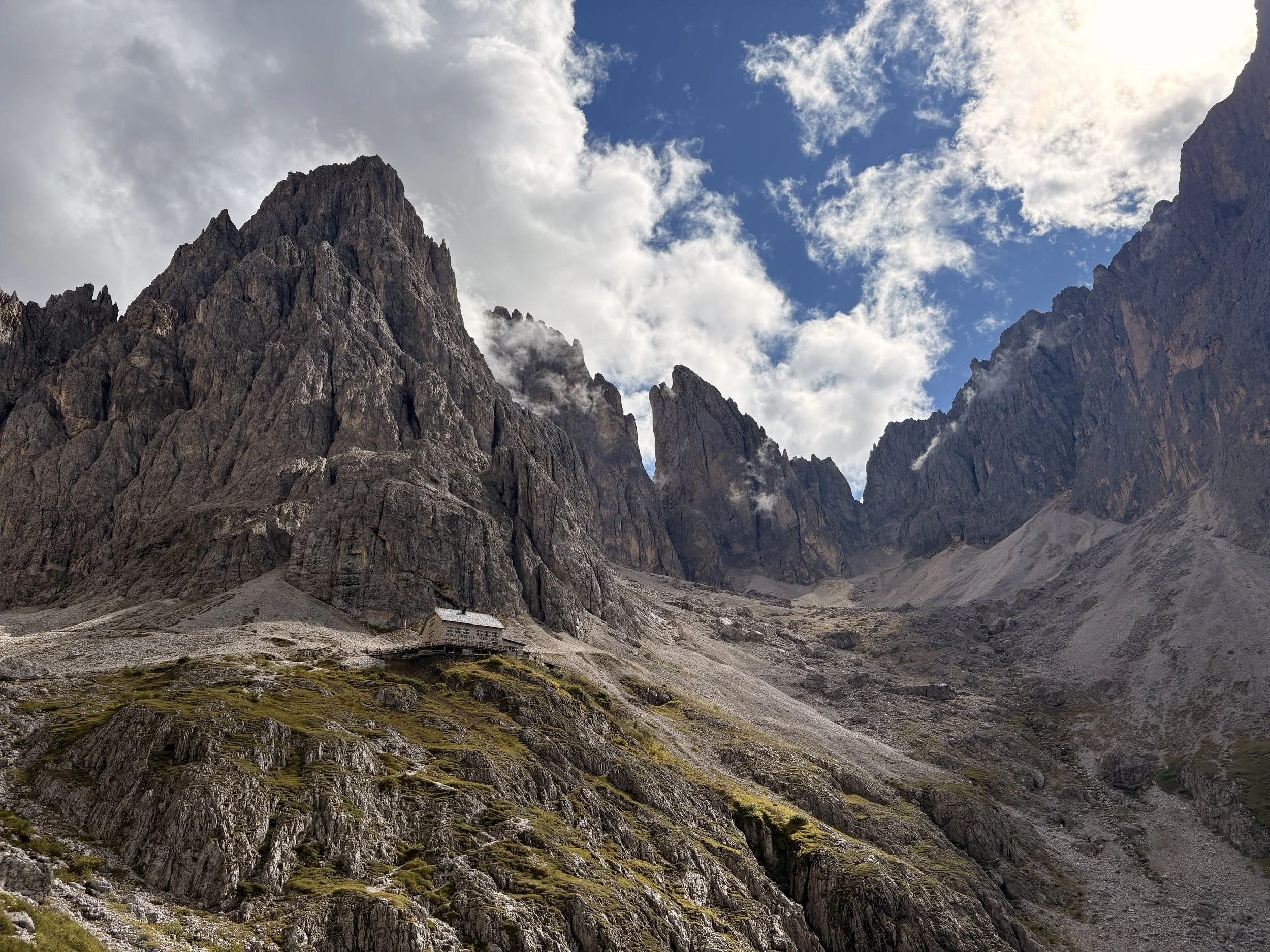
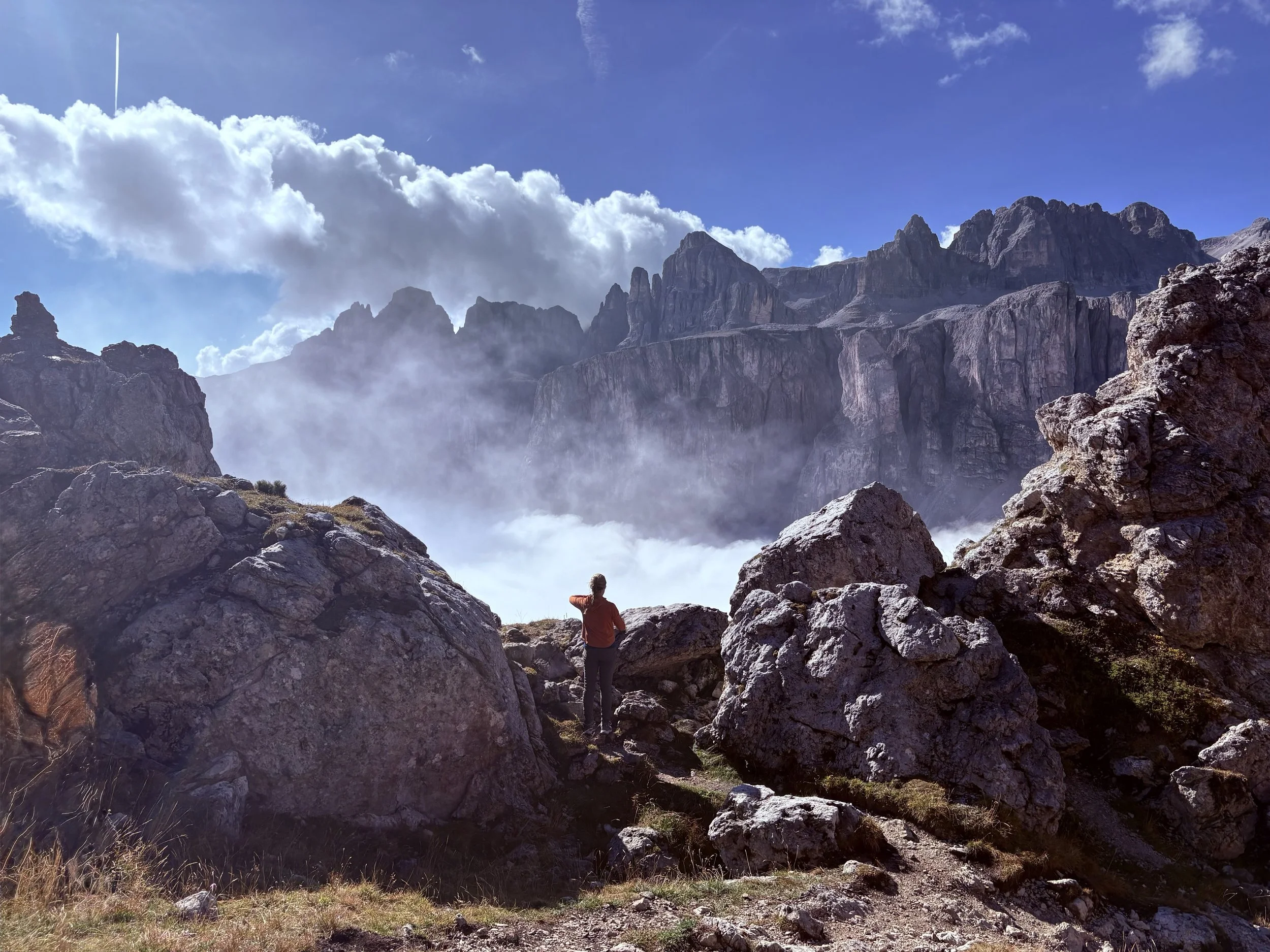
Within this area are the Dolomites. What was a tropical sea 250 million years ago, before the African continental shelf pressed into Europe, is now a region of majestic mountains. The Dolomites are part of the Alps, but the geology is completely different. Dolomite rock was once a massive tropical coral reef – it fractures vertically, creating sheer towers of light gray rock that, when you get above the treeline, can feel like a moonscape.
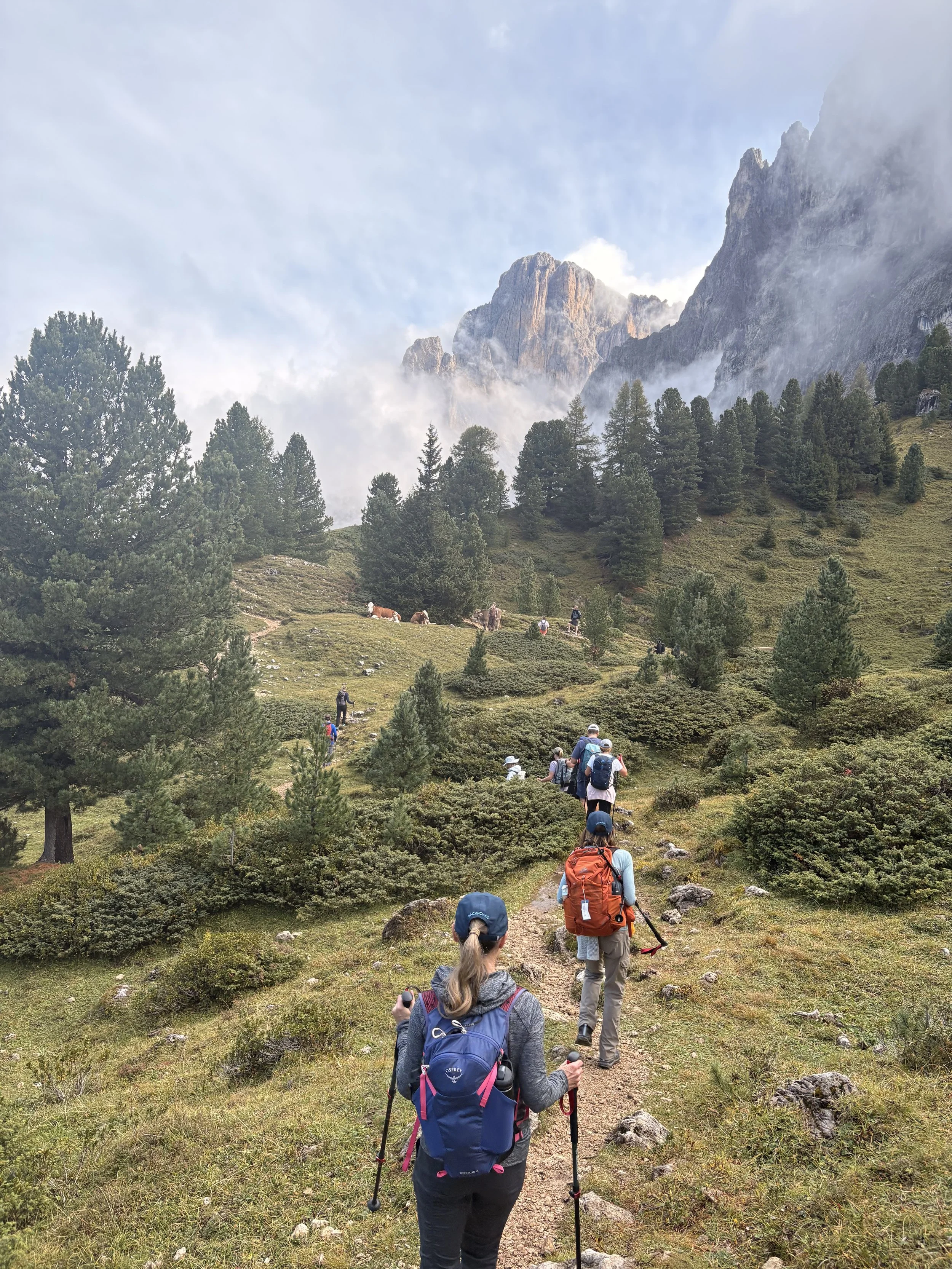
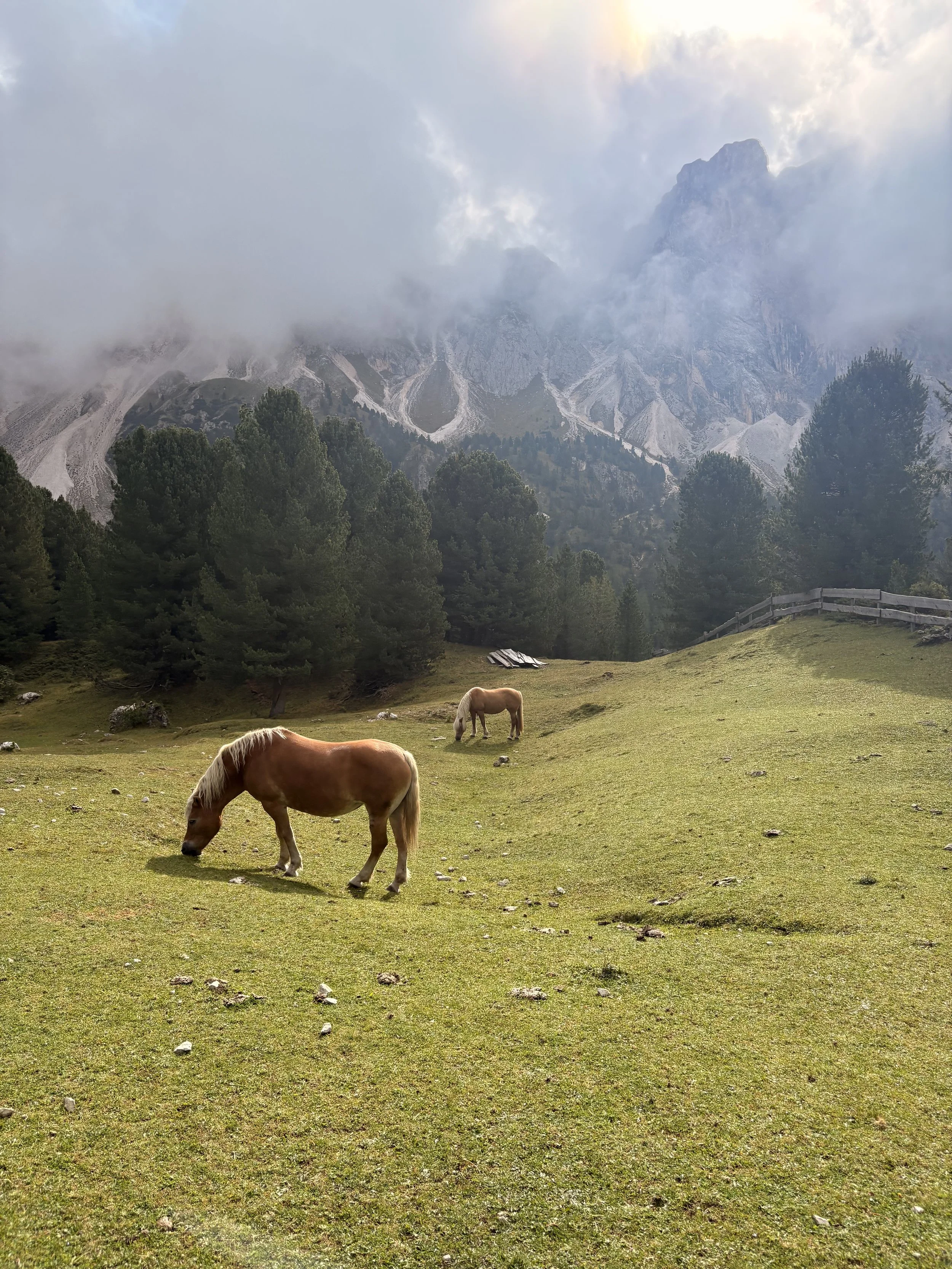
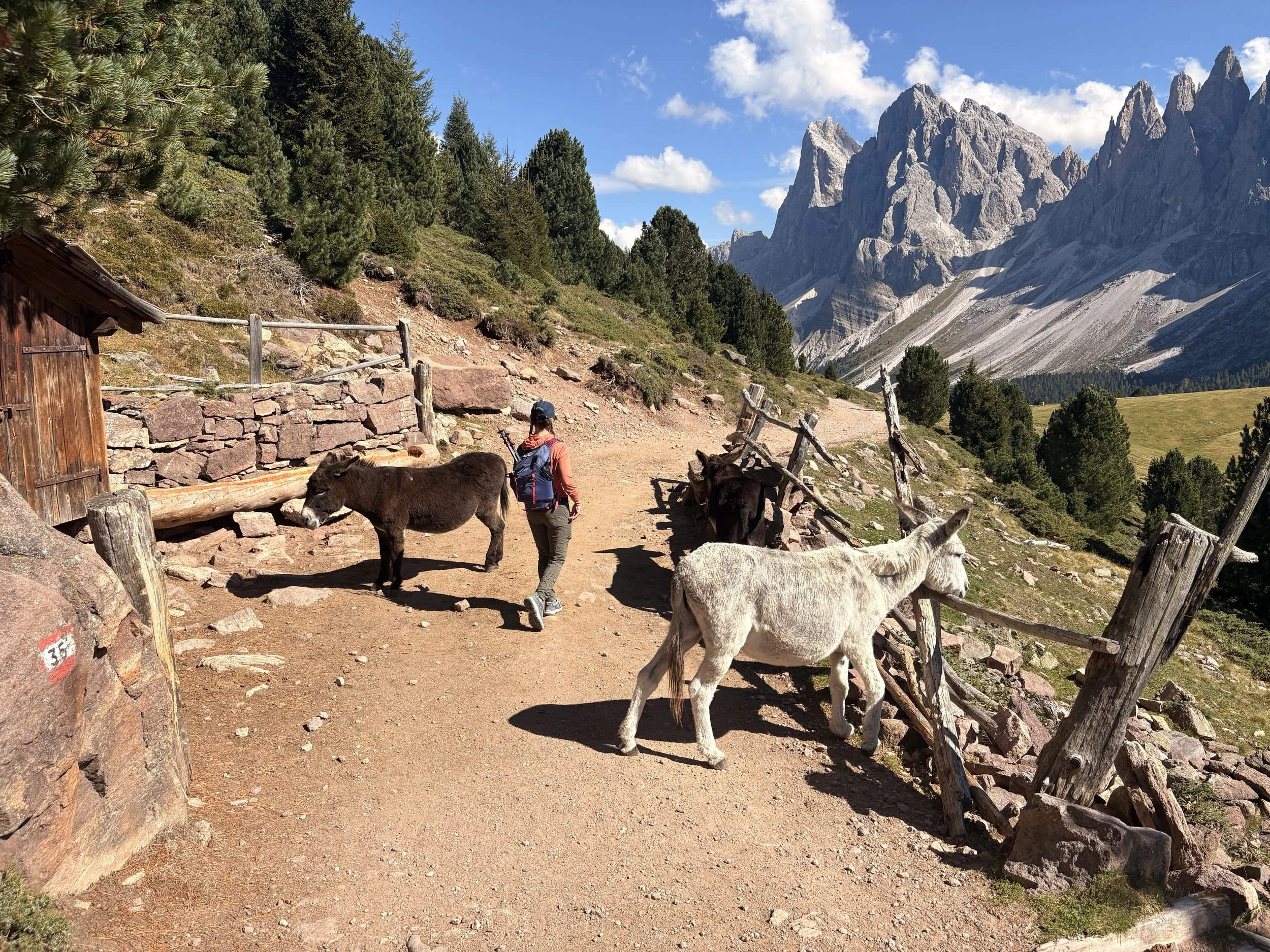
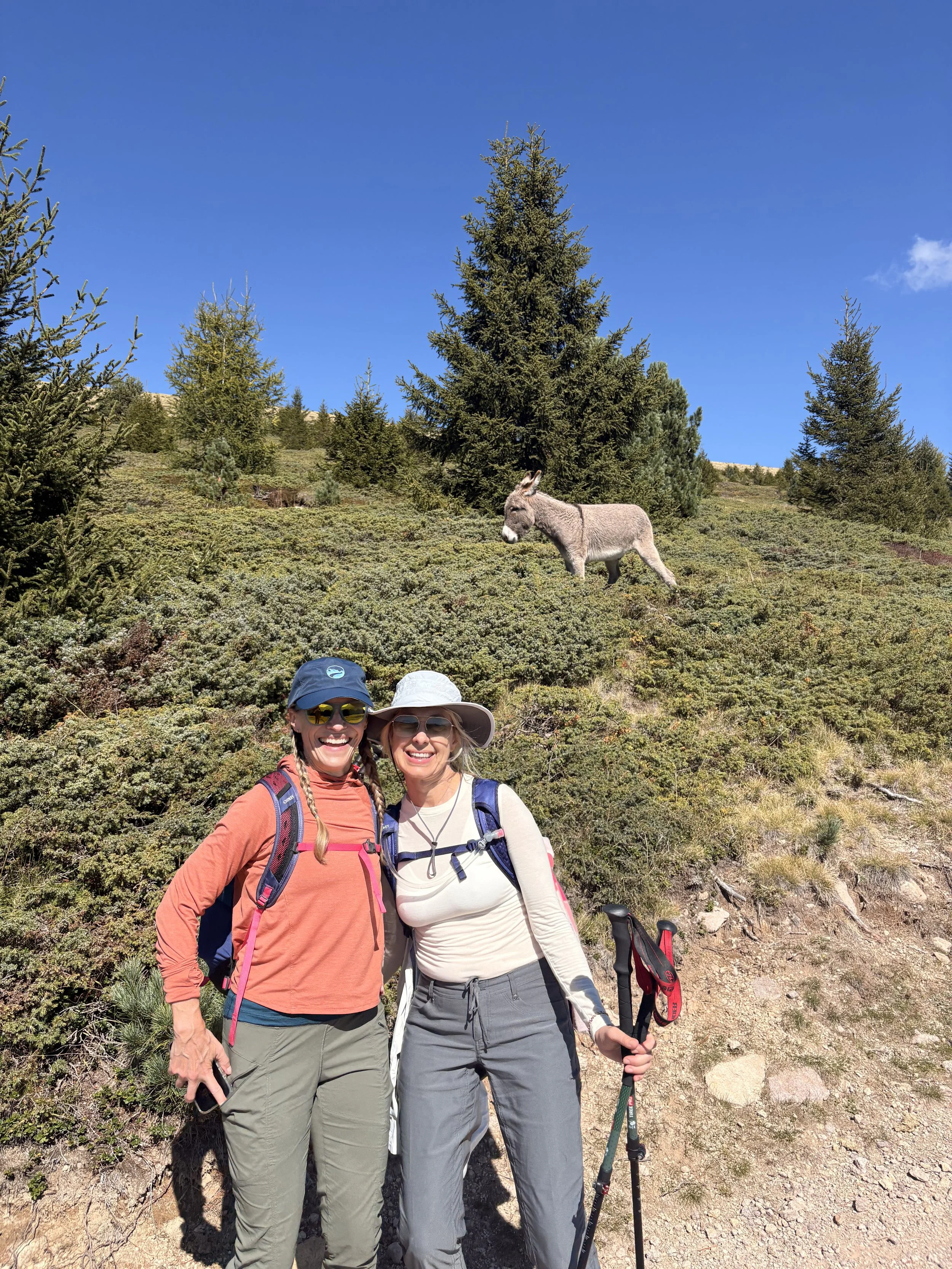
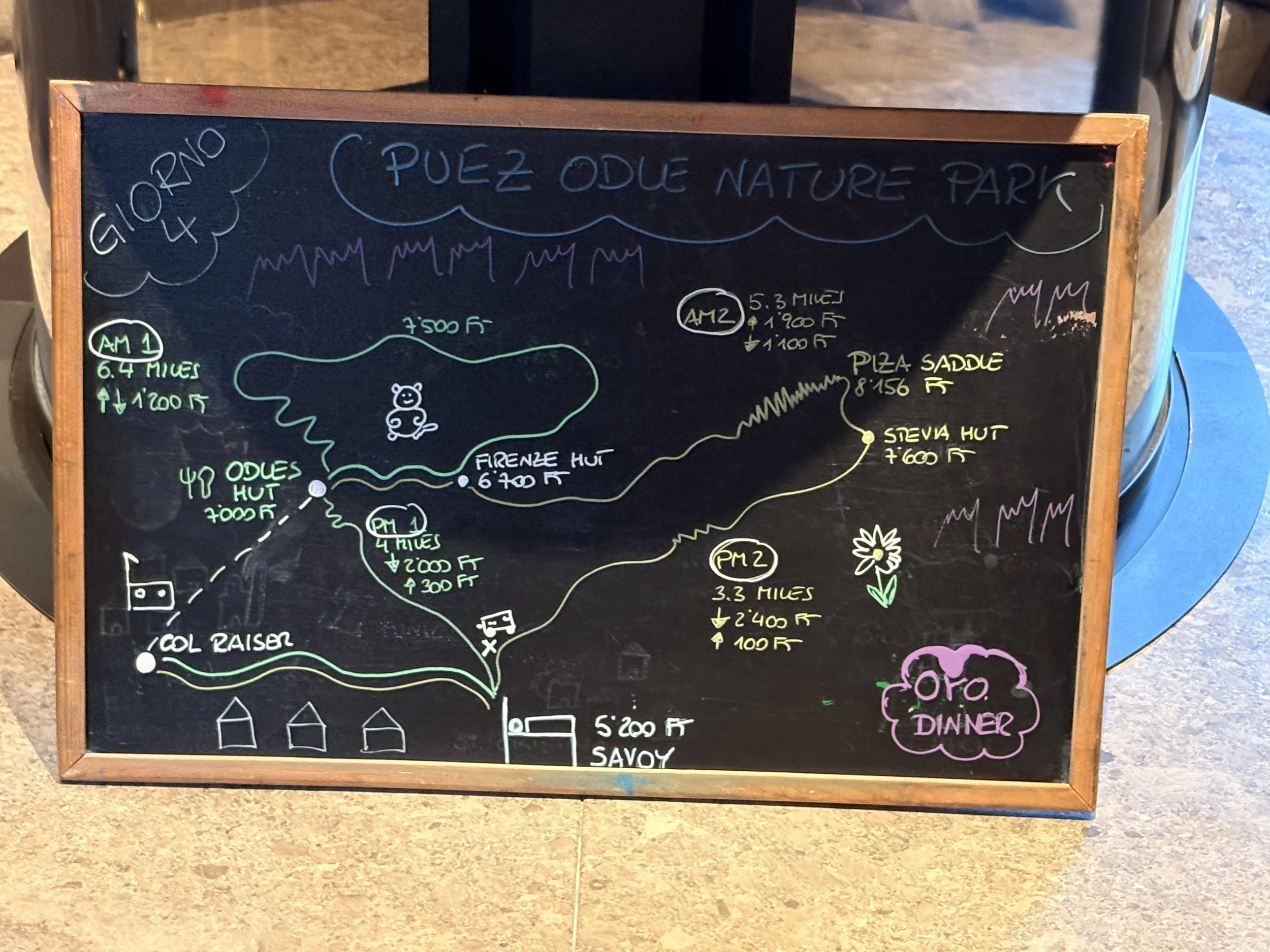
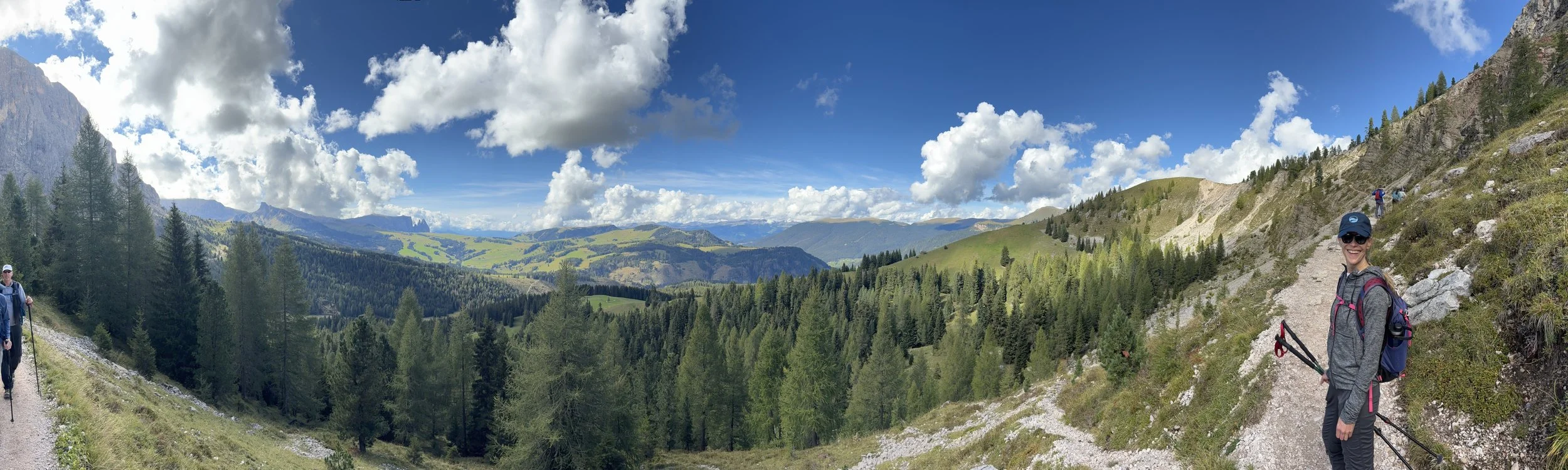
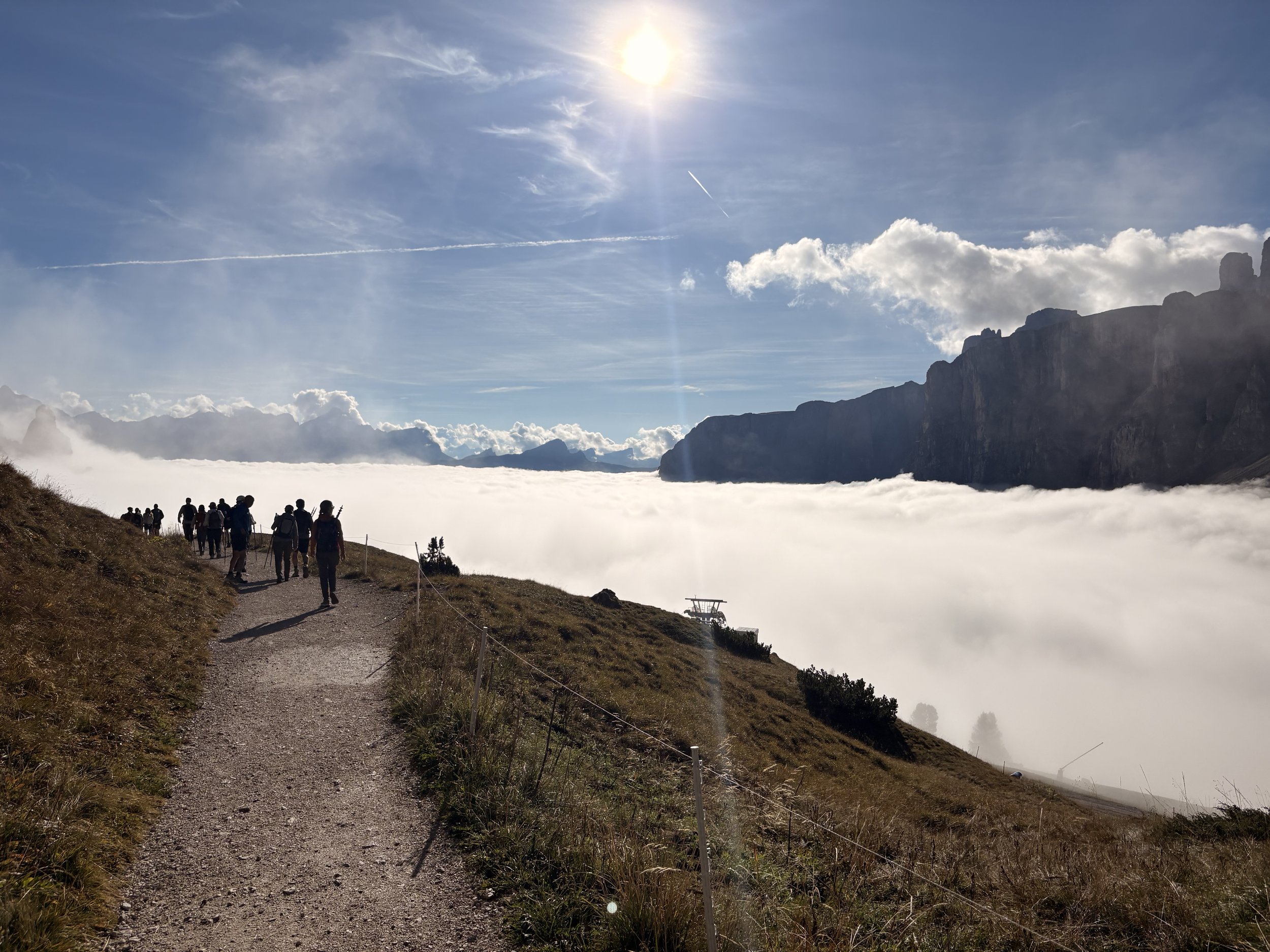
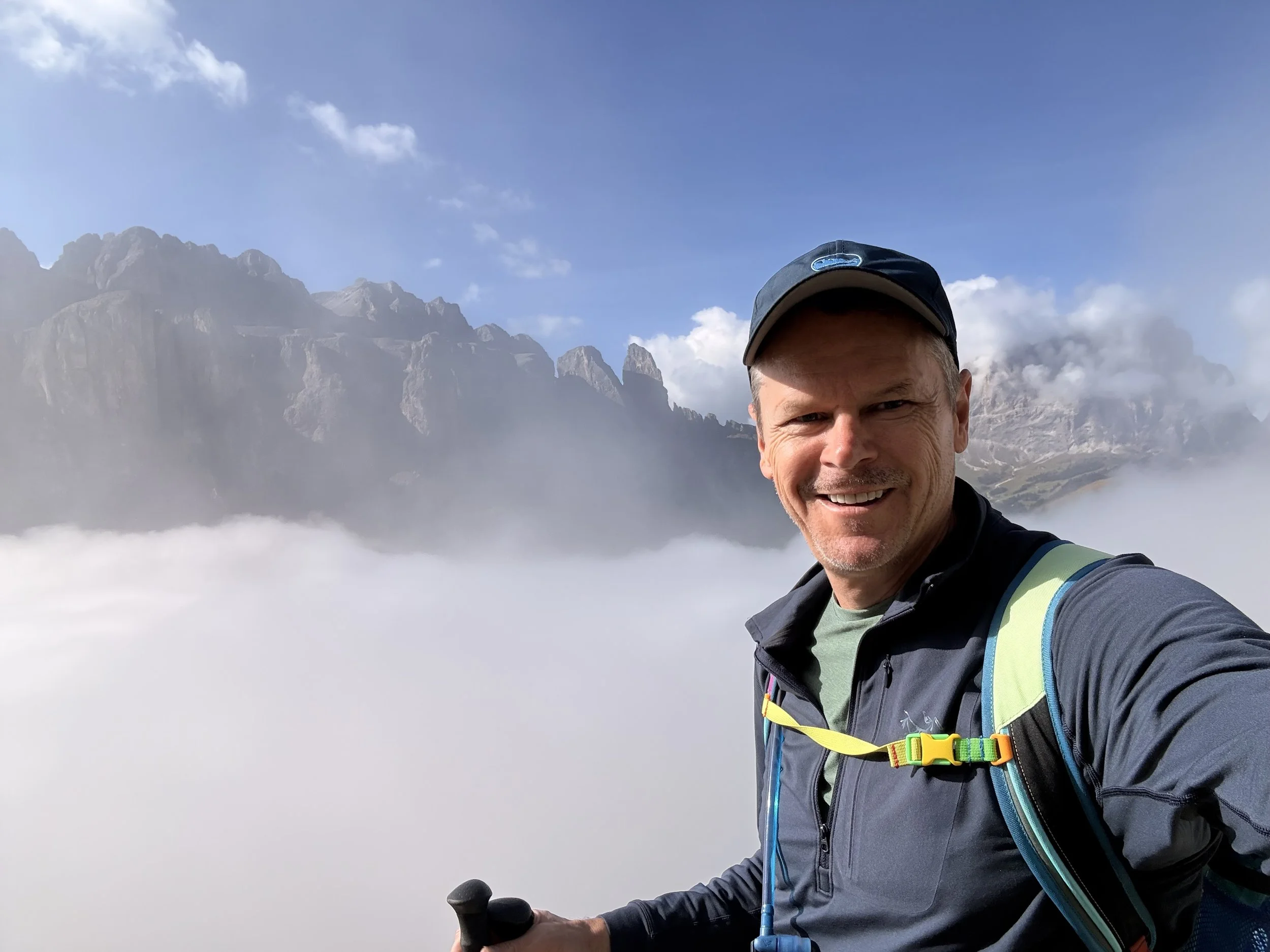
Amy and I just completed 52 miles of hiking across this land, lodge to lodge, over 6 days, via a tour led by Backroads. Days would start by leaving the lodge, walking through whatever adorable town we were in, sometimes taking a gondola up the first couple of thousand feet, and then walking through lush green meadows. The hills were alive – the meadows would be filled with livestock – cows wearing cowbells, donkeys, horses, goats, and even some alpacas.
Eventually the grassland would change over to the Dolomite terrain, filled with conifers that grew straight out of the porous rock – the compressed reefs of the ancient tropical sea continuing to give life. As we gained elevation we'd get above the treeline where the climbs would get more technical with scraggly rock and scree. We were fortunate to have guides that knew the way.
It seemed that each view bested the one before it. We'd look up and see jagged peaks. We'd look right and see a massive cliffside wall. We'd look down and see the meadows with the cows and their cowbells. We hiked above the clouds, and sometimes through ski resorts. We vowed to come back, but next time with our sticks in the winter.
How I'm feeling
A few weeks ago I said that some days I felt 60% and some days I felt 80%, but that I didn't remember the last time I felt 100%, and didn't know when (if), I'd feel 100% again.
I feel 100%.
The fatigue hasn't been an issue, no cough, no night sweats, and great energy levels throughout the hiking. There are still some minor side effects, but they are easily ignored. Honestly, my energy levels are better than they've been over the last couple of years, long before I was diagnosed.
While I'm sure there are highs and lows to come, I'm definitely on a high. It's all a strong indication that the medicine is working, and has really helped my confidence (and attitude) that we're going to beat this thing.
What I'm thankful for
Amy and I met a fantastic group of people from Indianapolis that were part of the guided hiking trip through the Dolomites. We crashed their party and enjoyed our hikes, hut lunches, spa time, and dinners together. Dan, Molly, David, Marion, Lara, and Steve are always welcome in Austin.
I'm thankful for the opportunity to get to know them.
Beyond that, I'm thankful for oncologists, everywhere. I spent a lot of time talking on the hikes with Dan – he's an oncologist. I joked that we were both on a vacation from cancer and that we shouldn't talk about it. Yet we did. He was incredibly open and offered to provide me with whatever support I needed on the rest of our trip.
My questions for him were more centered around what it's like to be an oncologist. How many patients do you have? What's your typical week like? What do you think of how our healthcare system is structured? How do you deal with the highs and lows? How do you balance work and life, when your work deals with life and death?
He didn't know how many patients he has. The ones that are doing better he only sees once a year. Some he sees in the hospital routinely. His days typically start before 5 am. He exercises and looks over images and notes for his patient visits that day. He goes to the hospital around 7:30 to see his patients at the hospital. He then has in-office visits. He finds time to consult with other oncologists on unique cases. He finds time to continue his education. He spends parts of the weekend catching up on paperwork, responding to emails, reading journals. He often has to give people very bad news.
He spent 15 years learning how to be an oncologist – undergrad, med school, residency, and I'm sure some other stuff. It seems like he loves what he does, which is important, because he spends upwards of 70 hours a week doing it. This is not an easy life – while I'm sure the money is good, someone as smart as Dan (or the typical oncologist) could have chosen many other ways to make a good living and have a better work-life balance. There are untold numbers of patients that have been lost, and as many lives that have been saved.
I'm sure Dan has routinely sacrificed time with his kids, learning a new hobby, taking a vacation, watching a Notre Dame football game, or just kicking back and relaxing.
Because of him, Dr. Yorio, and countless others…because of them, something that I have…something that would've been a death sentence 20 years ago…is something that I have a decent shot of living through.
Thank you is not strong enough.
A memory
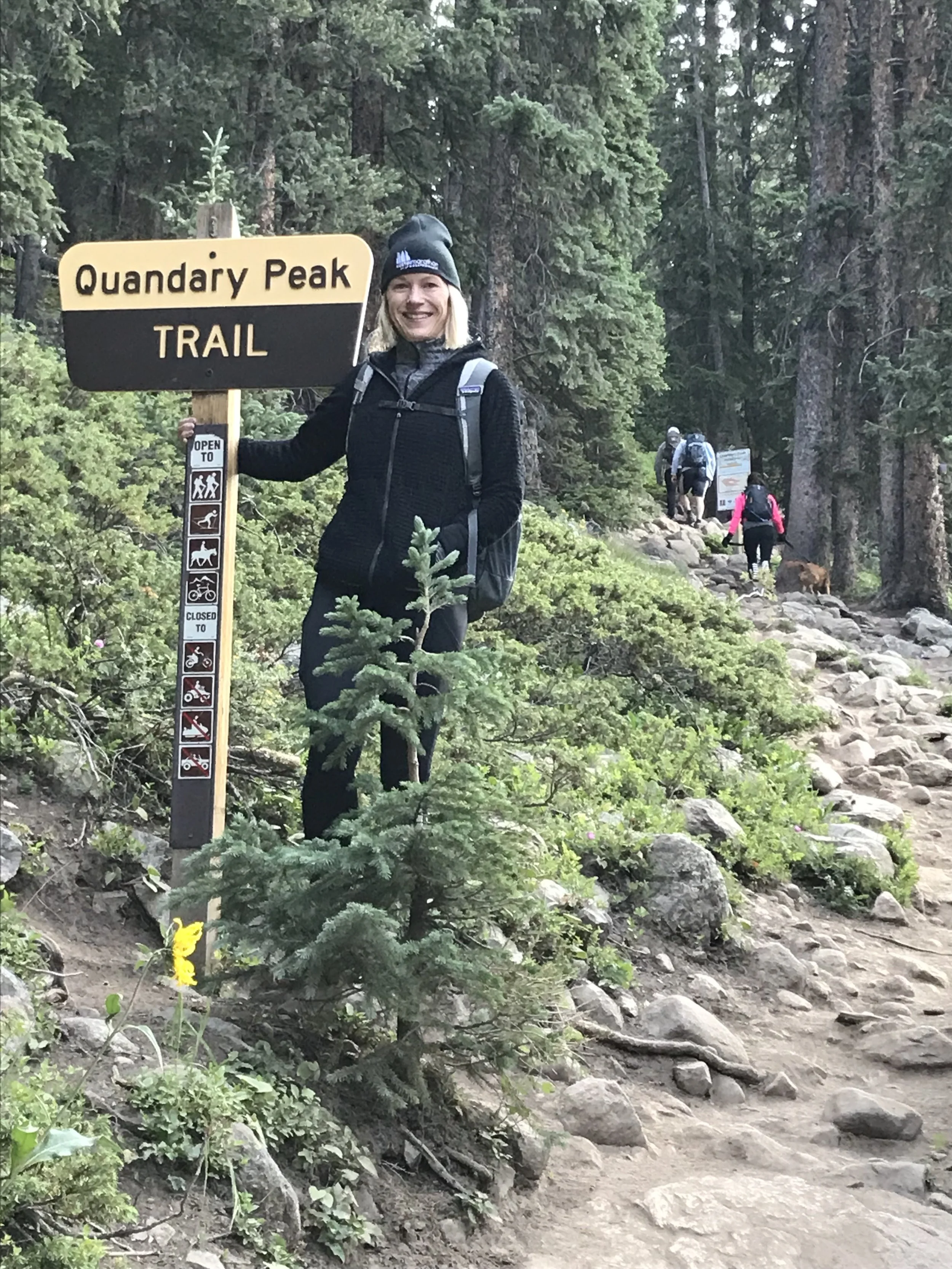
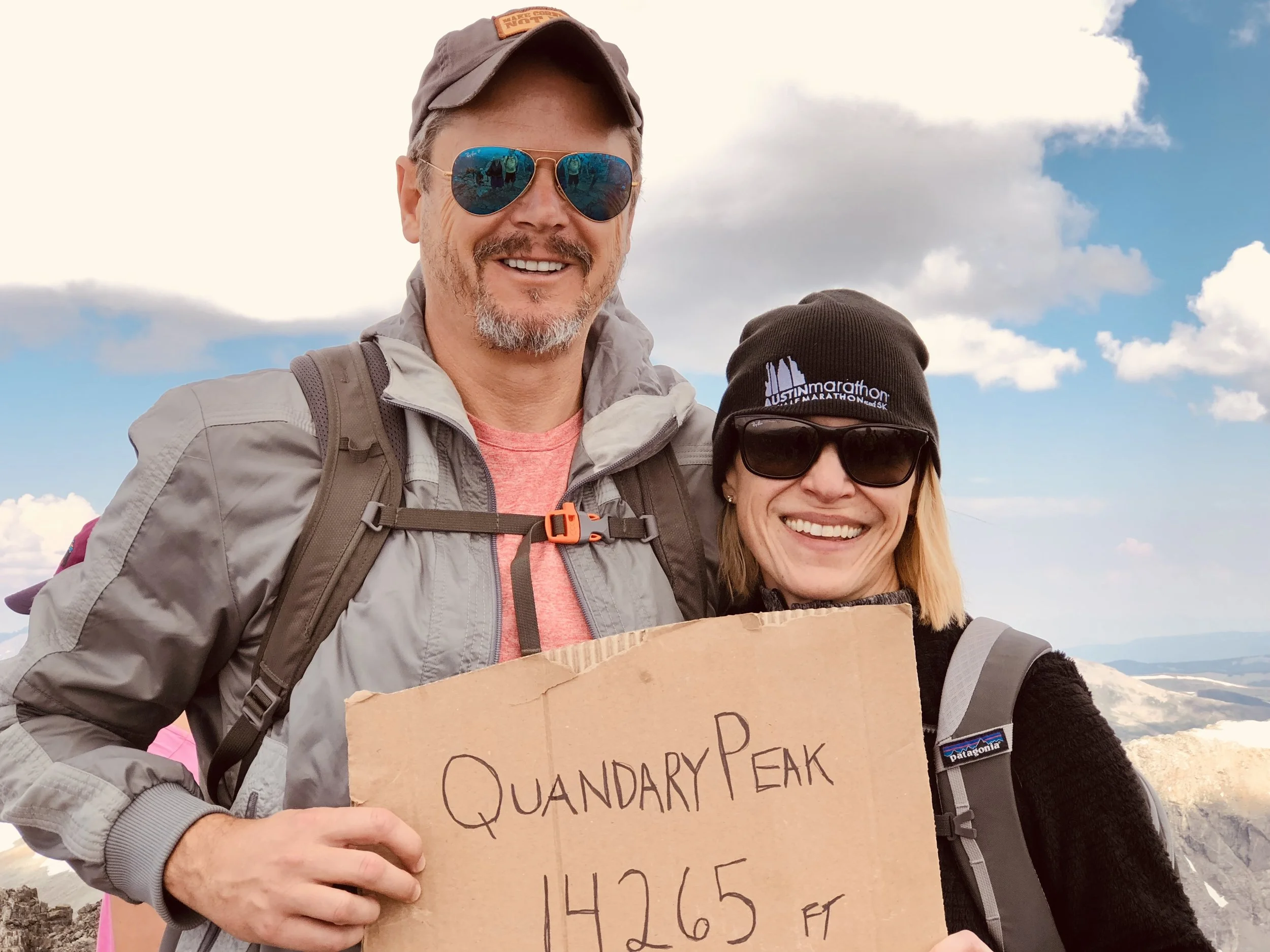
Years ago, sometime before the pandemic, Amy convinced me to hike Mount Quandary, near Breckenridge. It’s one of 53 official 14-ers in the Colorado Rockies. I think it was the first of our many hikes together. While I'd hiked before meeting Amy, it wasn't something that I'd say that I did. Like if someone asked me, what do you like to do? I wouldn't have led with hiking. Or had it in the top 5.
Now, I do. So major thanks to Amy for that. Quandary was my first 14er – Amy had done several when she lived in Colorado. I was happy to follow her lead.
Mount Quandary started around 9,500 feet and ascended to 14,272. We began early in the morning, just after dawn – rain could be unpredictable, but was more likely in the afternoon, and getting caught in a storm on the mountain at minimum, sucks, and at maximum, can be deadly.
The air starts out thin and gets much thinner as you ascend. By the time we got above 12,000 feet, we'd take a break every minute or two to catch our breath. We brought a couple of oxygen canisters. We used them.
We passed the treeline and eventually got to where there were pockets of snow. We made and threw snowballs at each other. We continued to climb. Eventually we reached the summit where we had 360° views of snow-packed peaks all around us. It was the middle of summer.
And that's when I learned that when you get to the peak you are only halfway there. The descent is as hard as the climb, in its own way. We had to drop the 4700 feet that we climbed. Now on weary legs. You move faster, but the knees take a pounding. Eventually, we made our way to the bottom, and shortly thereafter had a well-earned beer and a burger at the Breckenridge Brewing Company. And I was hooked.
Now, each year, we find somewhere to hike. Big thanks to Amy for bringing that into our lives.
What I'm looking forward to
I'm writing this on a flight from Venice to Dubrovnik via a connection in Munich. I am really looking forward to our time in Croatia. The first couple of days will be spent exploring Dubrovnik, walking the city walls, the cobblestoned alleys, popping into the churches and museums, sampling the wine, and topping it off with a Michelin-starred restaurant overlooking the Adriatic. On Wednesday, we catch an early morning, private boat that will take us to Hvar, with some island-hopping along the way.
Hvar is where we will max and relax, soak up the sun, swim in the Adriatic, hopefully rent a car for a day and explore various beaches and wineries. It'll be an opportunity to recharge in a different way, and I'm really looking forward to spending a few days there with Amy and no agenda.
Something I recommend
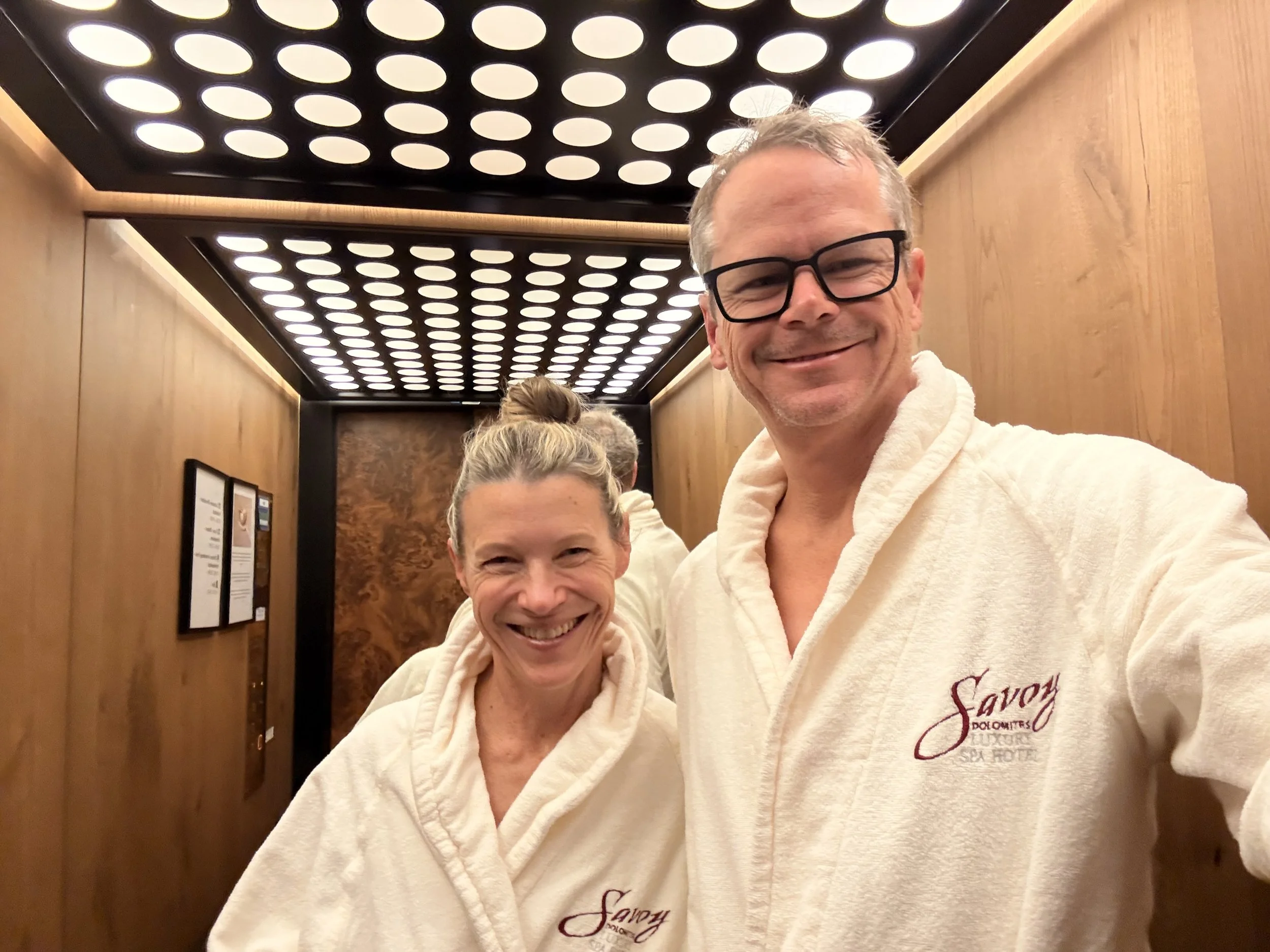
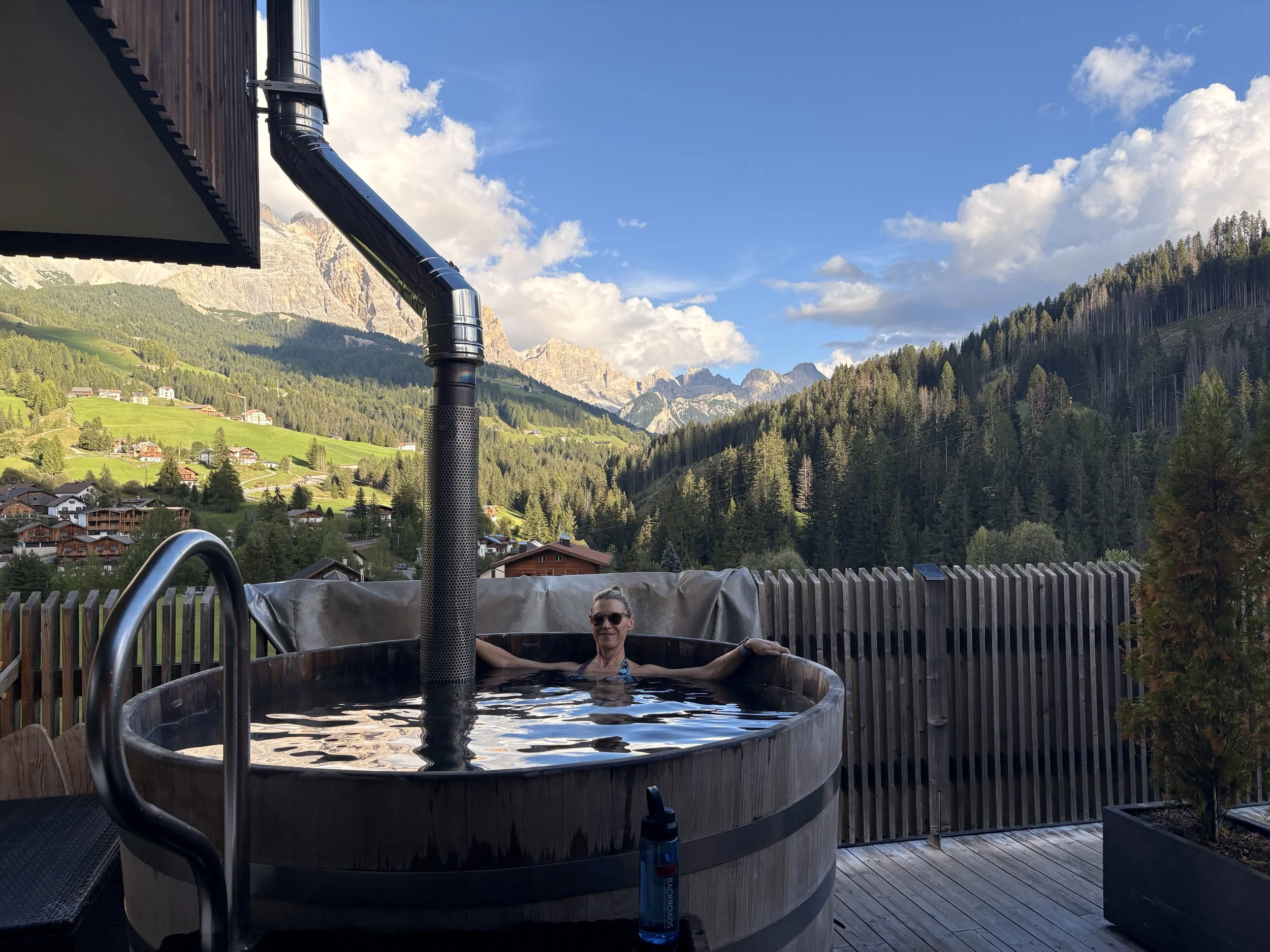
I highly recommend doing a trip through Backroads. This trip through the Dolomites with Backroads was the first guided trip I've ever done, and they did an amazing job. All details were well-planned. Our accommodations were 4- and 5-star lodges with spas. The huts we visited for lunch were ready to nourish us. The only criticism was that our dinners had way too many courses, but the food was too good to skip one. So while we burned 1000s of calories each day, it’s quite possible we may return to the US with a little extra meat (mostly speck) on our frames.
As guides go, ours – Evelin, Nick, and Sophia were highly knowledgeable – we knew what to expect each day, always felt safe, learned loads about the history, people, and geology, and were given options to choose the path you wanted to conquer as you hiked from one town to the next. They were also really fun to be around, with interesting journeys and backstories that led each to follow their calling as Backroads guides. Evaline has basically biked around the world. She's gone from Alaska to Patagonia, South Africa to Rwanda, across Europe and Indonesia – all of it began on a whim when she met her boyfriend years ago in Cambodia, when he'd gotten there from Egypt with his legs and two wheels.
I already started scouting out lodge-to-lodge trips that they offer in Peru and Nepal.
What I ate
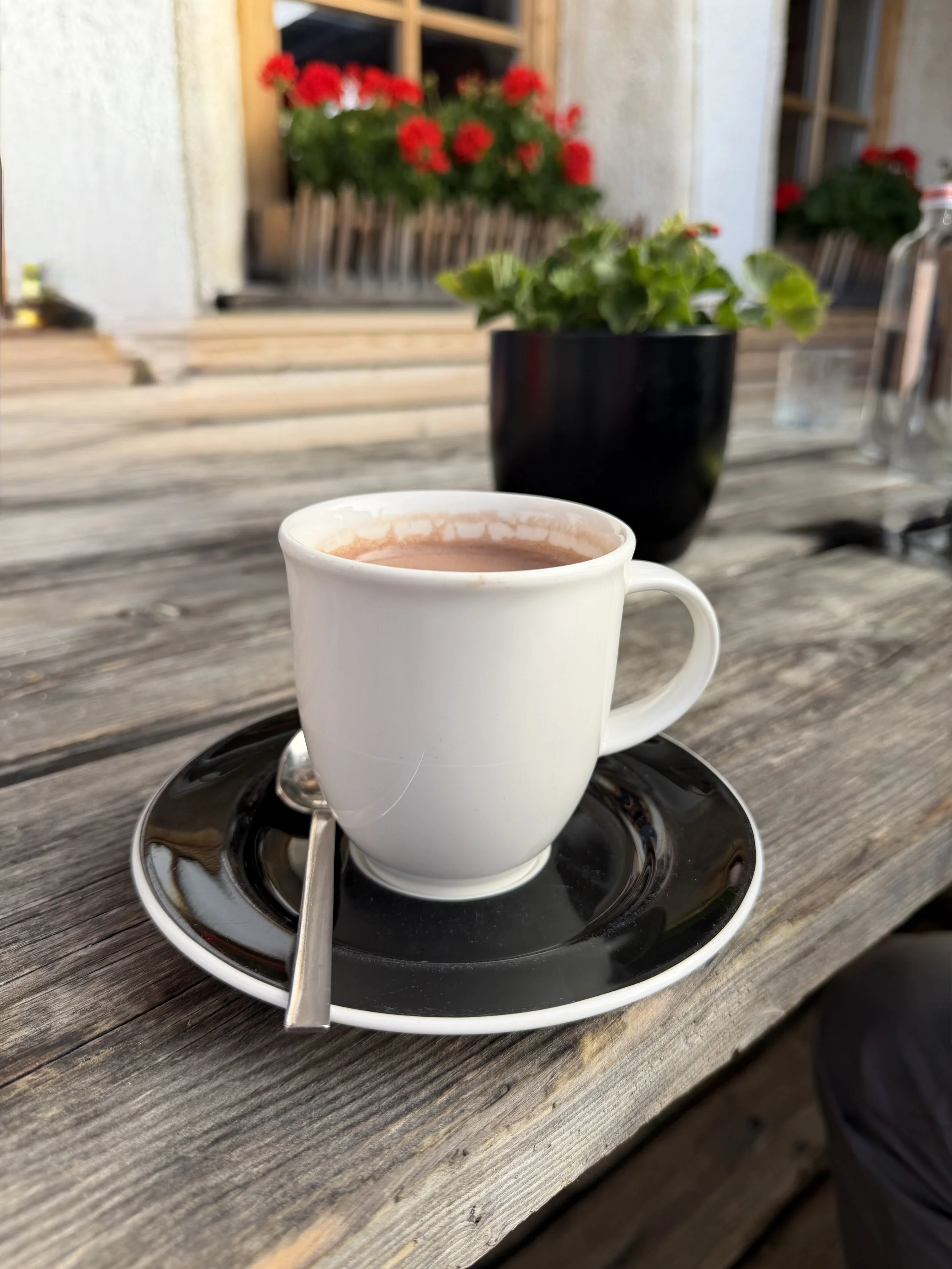
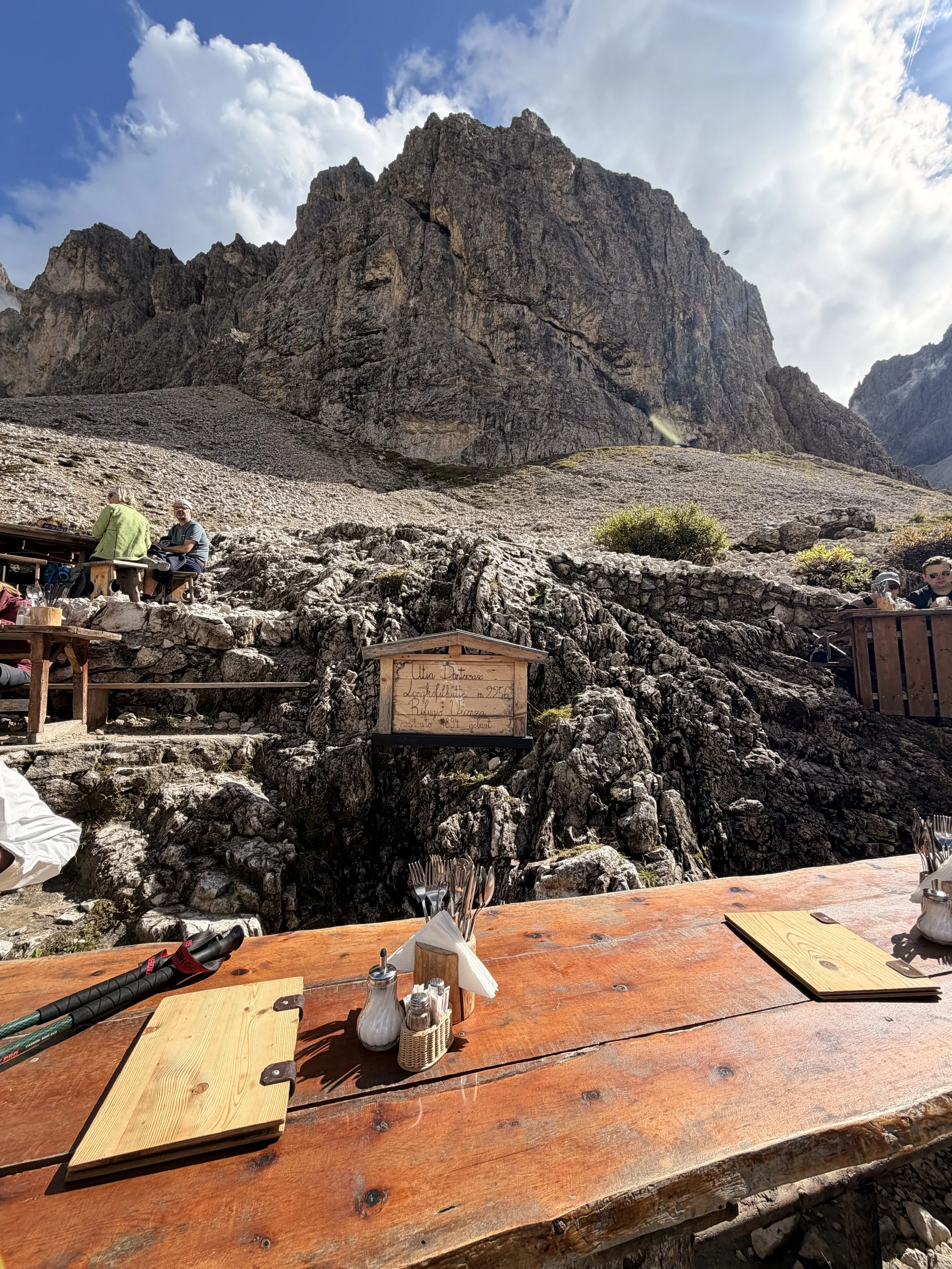
Each day, we would have a stop or two at mountain huts – one which dated back to 1894 and sat at well over 7000 feet. The morning stop would be for an espresso, or (one day) a hot chocolate. The afternoon stop would be after we'd built up an appetite, typically after five or six miles of climbing up, and we'd eat, before we made the descent to our next destination.
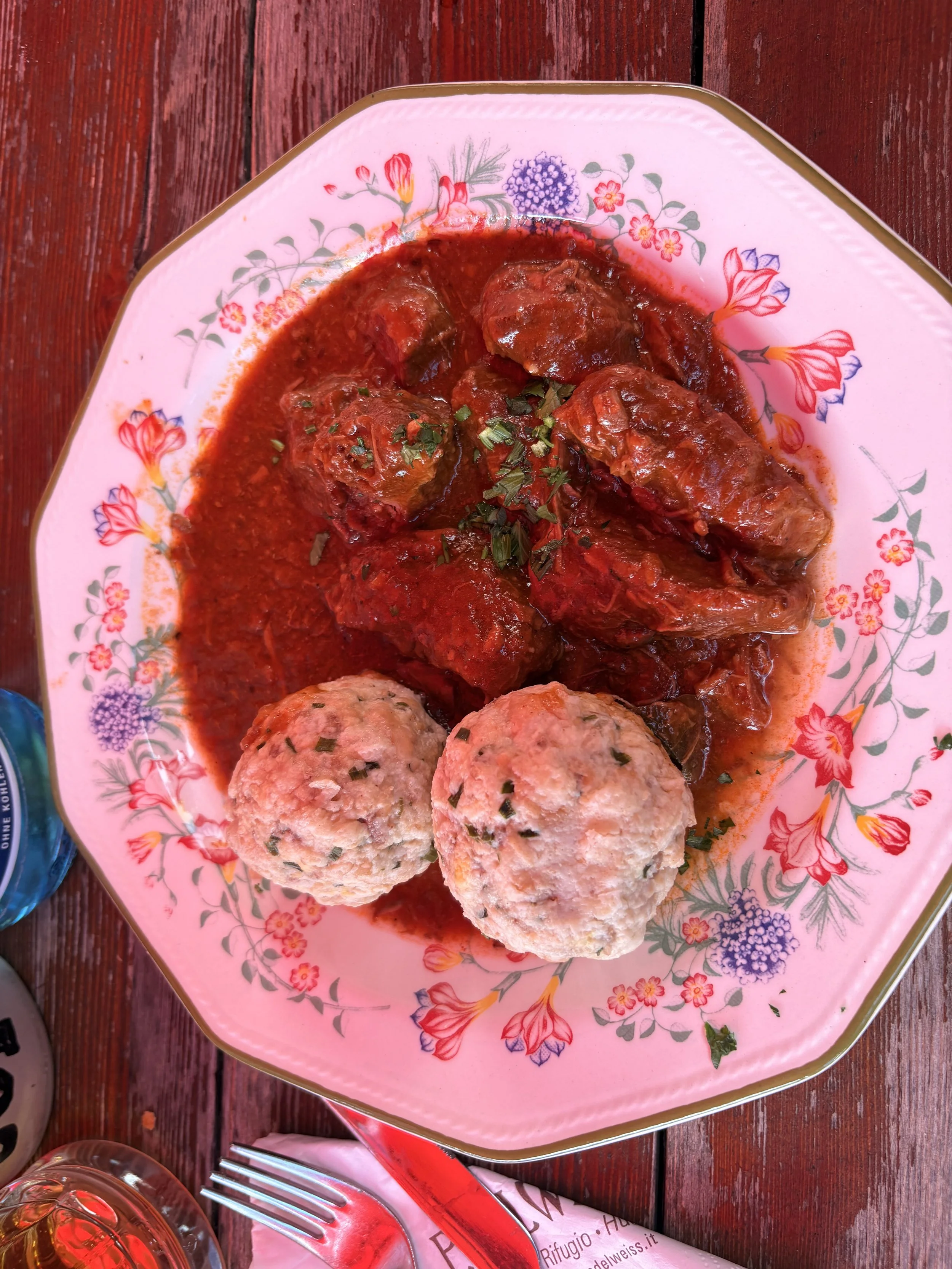
The meals would consist of traditional food of the region. I had beef goulash with speck dumplings more than once. I had Wienerschnitzel. One day there was a delicious spaetzle with local sausages. By local I mean from the farm surrounding the hut. Most days would have a charcuterie plate with an array of Italian hams, salami, and cheese. The food was nourishing and got us ready for the miles that remained.
Random thought
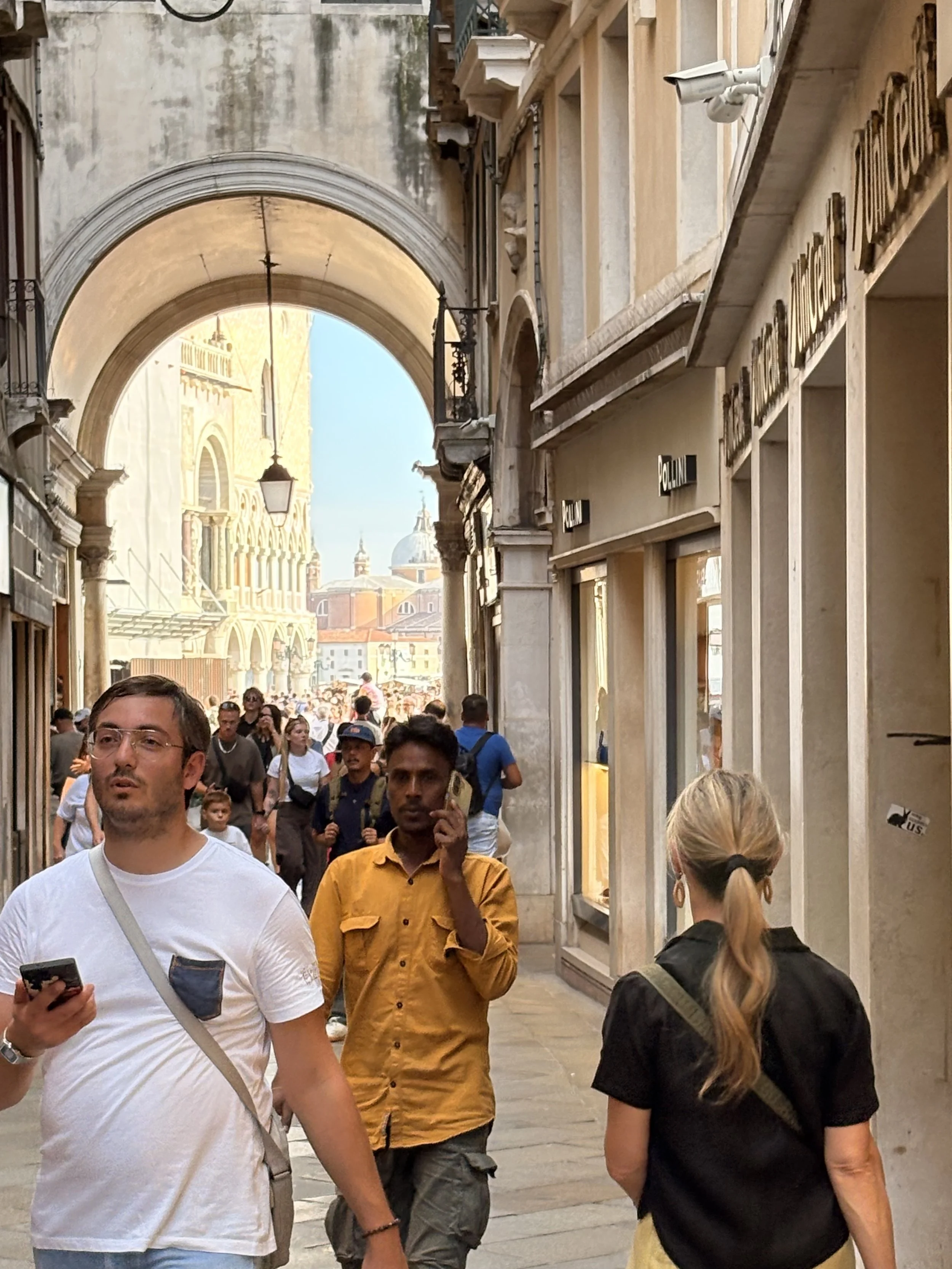
Last night Amy and I went from our hotel by the Venice Airport into Venice proper for a few hours. We had a pre-dawn flight this morning, but it was hard to pass up the opportunity to see such an iconic city. Venice is possibly the best example of something that looks good from afar and bad up close.
It's not our kind of town. Everyone there is a tourist – and for good reason – the place should be a wonder of the world. The architecture and the canals continuing to demand that they survive despite the prevailing insistence of the environment and logic.
And when you're there, you have no idea where you're going. And neither does anyone else. Everyone is wandering through narrow alleys, looking at their phones to find the next turn. And still everyone makes a wrong turn or two. It smells in places. It's commercialized – we walked past a Footlocker, a Victoria's Secret, a Prada store and a gelato shop that had Oreo and Coca Cola flavors. When you get to the Rialto Bridge or Saint Mark's Square, it's you and a thousand of your closest friends, everyone with their cameras out, trying to catch a memory and provide proof that they were there, trying to believe that they are experiencing it in its glory and that it's special, all the while someone is bumping into them or shouting or trying to sell you a rose.
We also had our cameras out as well, and it was, at times, breathtaking. There'd be spots… a random bridge, a no-name church from the 15th century, or a spire in just the right place. There'd be spots where your jaw would drop in awe. Every so often, as you walk through Venice, you are able to escape the zombied masses and see something that takes your breath away.
I don't know that we'll ever be back. Again, it's not our kind of place. But if you have a chance, you should see it. If just for a few hours.
*update on my mom – it was a long journey, but she made home safely from Cairo last Friday. She’s scheduled with the Doctor and PT and on her way to recovery.